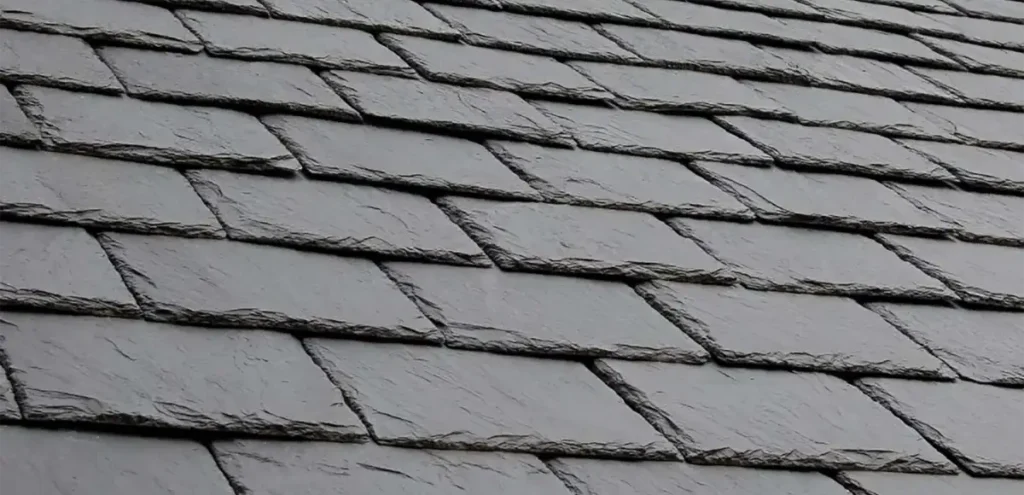
Brava Tile is changing how homeowners across Western Pennsylvania think about premium roofing. The composite tile system delivers the look of natural slate, cedar shake, or Spanish barrel tile without the weight, fragility, or maintenance demands of those materials. Big River Roofing installs Brava Tile across Mercer, Lawrence, Butler, and Beaver counties for homeowners who want the curb appeal of a high-end roof with the performance of modern engineered polymers.
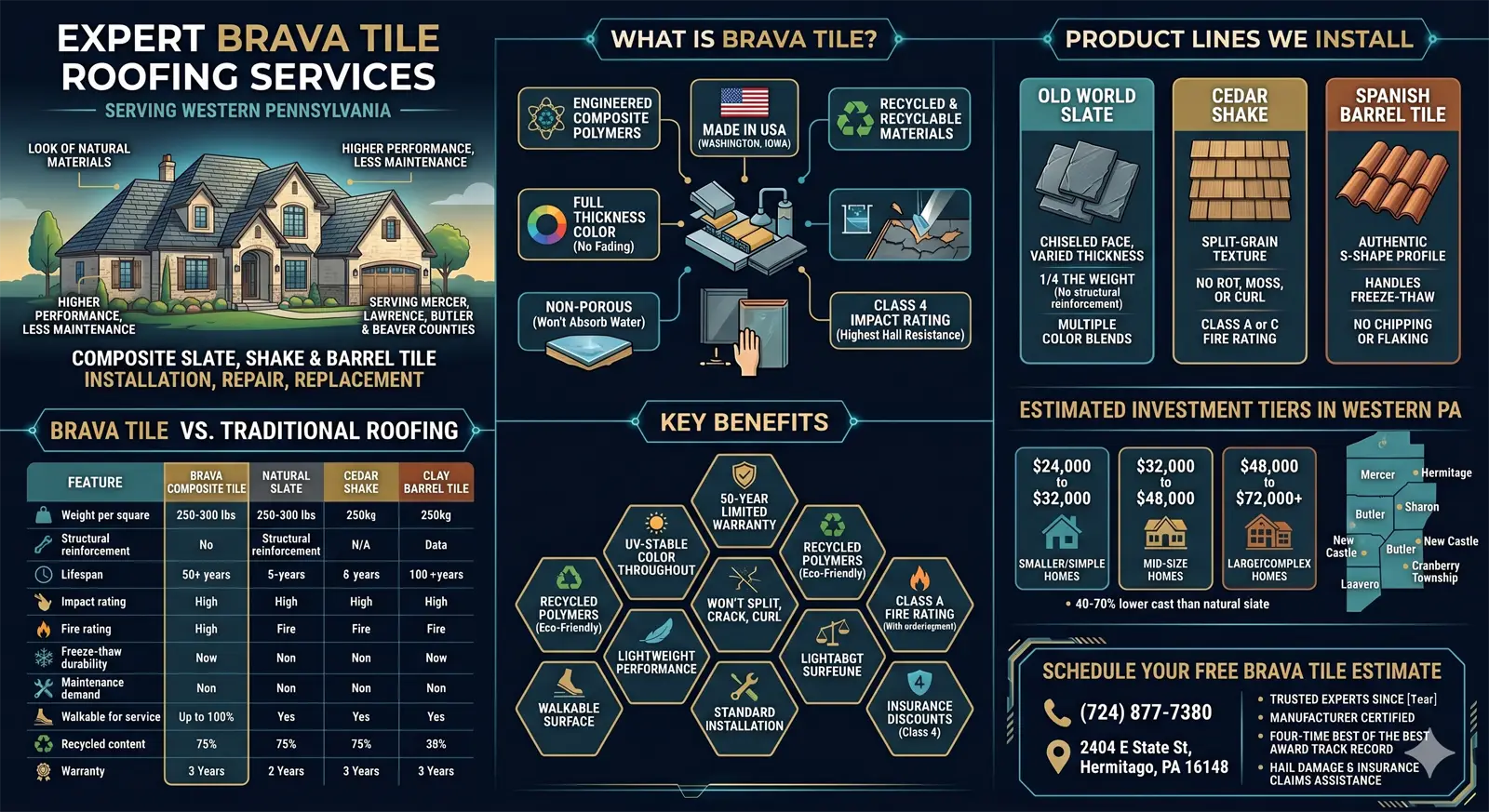
Made in the United States from a proprietary blend of recycled materials, Brava tiles carry a Class 4 impact rating, a 50-year limited warranty, and color that runs through the full thickness of each tile rather than sitting on the surface. For homeowners in Hermitage, Sharon, New Castle, Butler, and Cranberry Township who are weighing slate, cedar, or clay tile, Brava offers a fourth option that solves the practical problems that traditional materials present in our regional climate.
What is Brava Tile?
Brava Roof Tile is a composite roofing product manufactured in Washington, Iowa from recycled polymers and stabilizers. The tiles are engineered to replicate the look of three traditional roofing materials, while addressing the weight, cost, and durability concerns that come with each one. You can learn more about the manufacturer’s product line on Brava’s official site for a deeper look at the science behind the tile.
The product was developed for homeowners who wanted a slate or cedar look without the structural reinforcement, premium price, or replacement headaches. Brava holds a Class 4 impact rating from UL 2218 testing, which is the highest impact resistance available for residential roofing. That same rating qualifies many homeowners for insurance discounts in hail-prone regions.
Unlike fiber cement or asphalt-based imitation products, Brava is non-porous and will not absorb water, crack from freeze-thaw cycling, or grow moss and lichen the way real cedar shake or slate sometimes does in shaded Western PA yards. Color is solid throughout the tile, so chips, scratches, and cut edges show the same hue as the surface.